Rabbi Eliezer Papo zt"l — author of the "Pele Yoetz"
His Early Years
In 1786, in the city of Sarajevo, Bosnia, our Rabbi, Rabbi Eliezer Papo zt"l, was born — one who would go on to illuminate the world of Torah and mussar. His parents, the pious Rabbi Yitzchak and Mrs. Blanca, raised their son in a home steeped in love of Torah, awe of Heaven and fine character.
Already in childhood his purity of heart and lofty aspirations were evident. It is told that when asked what he wished to be when he grew up, he answered simply:
“I want to be a good Jew.”
This brief answer captured the essence of his life: a ceaseless striving for perfection in the service of the Creator — in Torah, prayer, character, and in relationships between people.
His Father's Home
In a moving passage, our Rabbi writes of his father's final days, from which we glimpse the exalted home in which he was raised:
"My honored father of blessed memory, every day of that illness recited the prayer 'To You, my God, is my longing' and other confessions and supplications of Yom Kippur, and streams of water flowed from his eyes… and to everyone who came to him he would say: 'See the end of flesh and blood.' Fortunate is he and fortunate is his portion."
Our Rabbi and his wife merited two sons and two daughters. He mentions his brilliant sons in several of his works, and after his passing his sons took a central role in publishing his writings — and thanks to their devotion the Jewish world gained spiritual treasures whose influence is felt to this day.
Rabbi of Silistra
Around 1820, at about thirty-four, our Rabbi was called to serve as rabbi of Silistra, Bulgaria. Despite his young age he was already known as an outstanding Torah scholar and a leader whose community's welfare was always before his eyes. He carried the burden of the public, cared for the poor and weak, and made peace between people.
One famous episode tells of a Jew falsely accused and sentenced to death, for whom the authorities demanded an enormous sum. Our Rabbi gathered the townspeople and declared with emotion that if they had no money to redeem him — even the Torah scrolls and sacred vessels should be sold, for saving a life overrides all. His words pierced their hearts, the sum was raised, and the man's life was saved. Such was his way: Torah that does not remain on the page, but descends into life and becomes responsibility, devotion and kindness.
His Holy Works
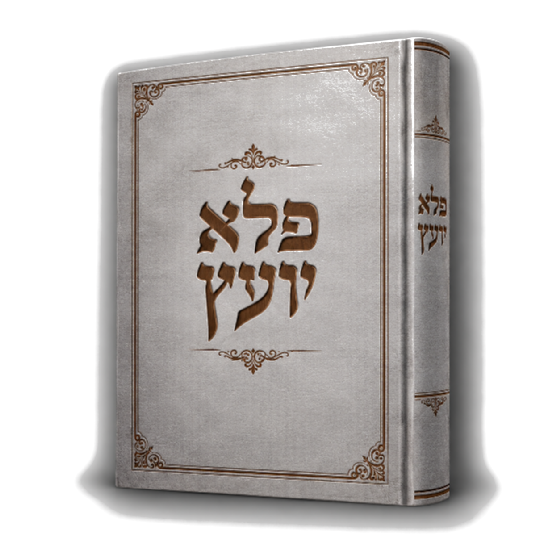
Alongside leading his community, our Rabbi bore a vast Torah enterprise, authoring many works of halacha, mussar, homiletics and prayer. The crown jewel is his renowned "Pele Yoetz" — a comprehensive mussar work arranged by topic in alphabetical order, guiding a person in the service of the Creator, refining character, family life and raising children.
Its uniqueness is its ability to touch every person — clear, practical words full of love, combining lofty spiritual demand with deep understanding of the human soul. Among his other works is "Chodesh HaAviv" on tractates Berachos and Shabbos, on which he labored seven years. When asked how he found the time, he answered:
“If a person wants to, he will always find time for Torah.”
His Final Days
In 1827 our Rabbi fell gravely ill, and during his illness the name "Yechezkel" was added to him as a segulah for healing. On Thursday, the 20th of Tishrei 5588, during Chol HaMoed Sukkos, he returned his pure soul to its Maker — at just forty-one years old.
According to tradition, before his passing our Rabbi learned that a plague was to strike the city, and from Heaven he was given the possibility to take the decree upon himself and save his community. Our Rabbi, who all his life gave himself for the public, chose to sacrifice himself for the people of his city.
The Power of Prayer at His Site
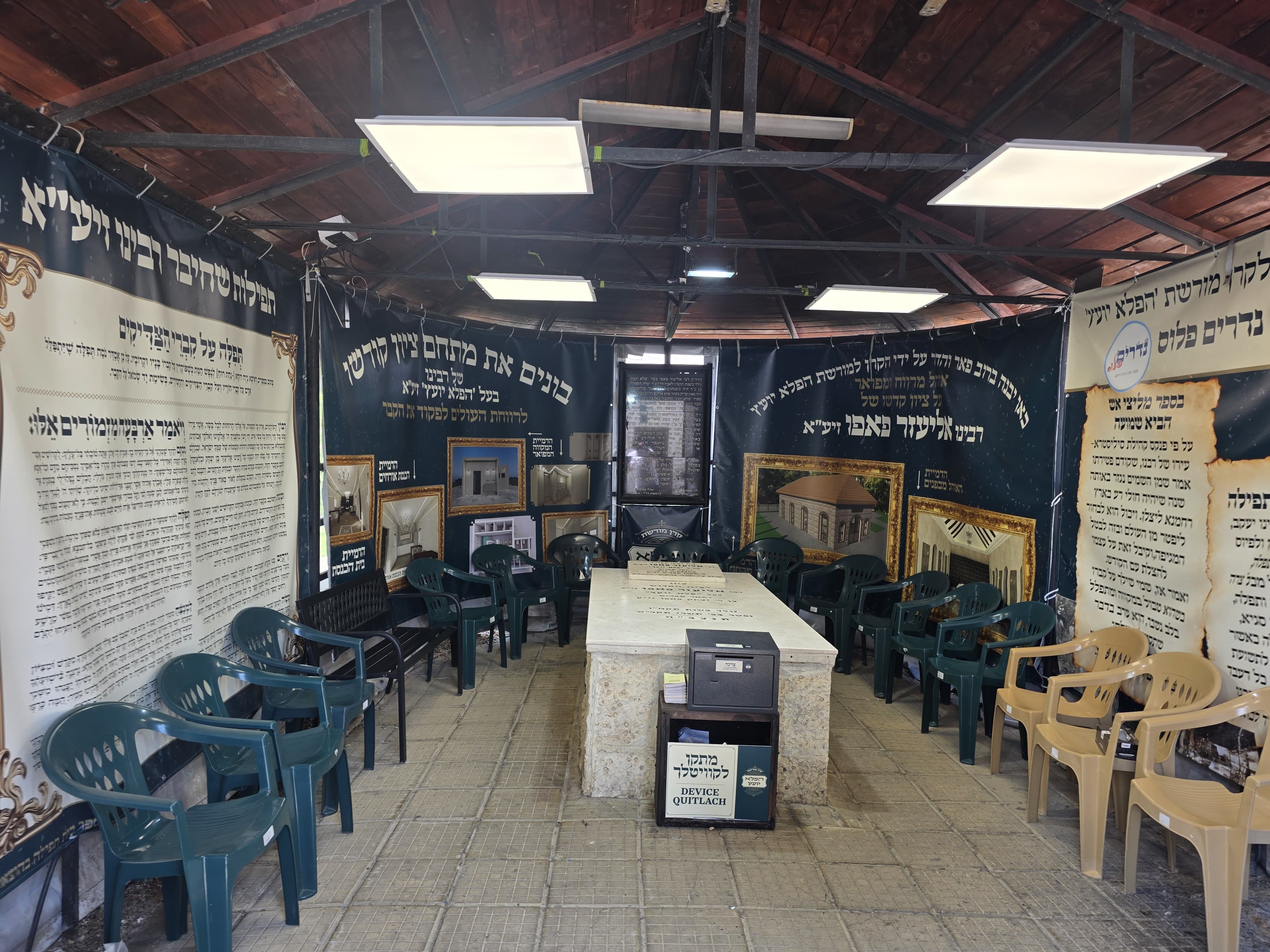
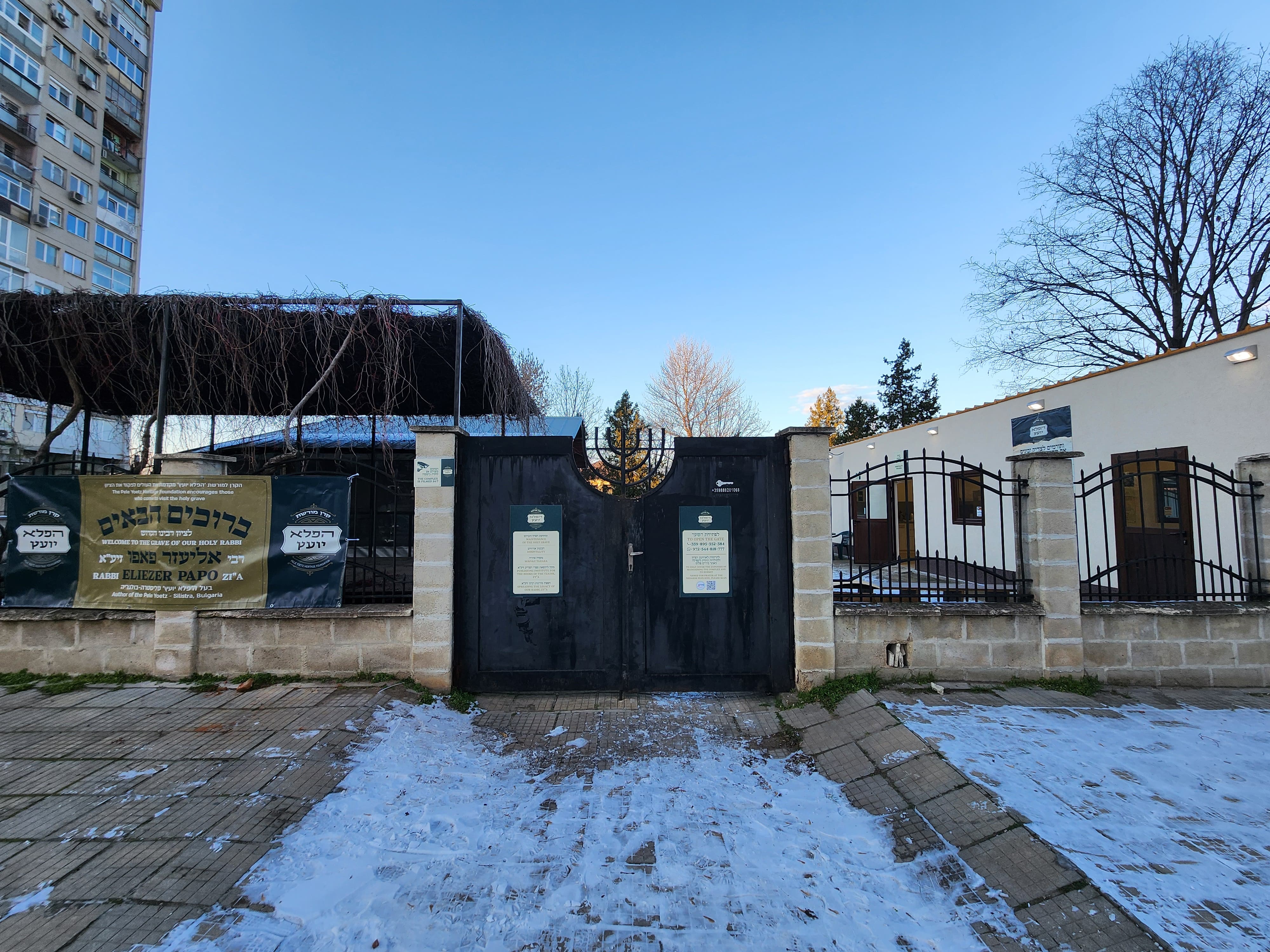
His holy resting place has, over the generations, become a focus of prayer and pleas for mercy. In the work "Melitzei Esh" a special testimony about the site is brought:
"Whoever goes to his grave after immersing in a mikveh and prays with a broken heart — it is assured that his prayer will be accepted… and indeed great salvations have come to those who do so."
Many are careful to this day to immerse in a mikveh, ascend to the grave in purity, and pour out prayer with humility and a broken heart.
The Headstone That Would Not Move
A wondrous tradition passed among the local Jews from generation to generation. When the authorities sought to build a church on the Jewish cemetery grounds, they began clearing graves and uprooting headstones. When the workers reached the headstone of the Pele Yoetz — they could not move it. Repeated attempts to uproot it came to nothing.
According to tradition, before those present the headstone began to sink whole into the ground. The astonished Russians understood that a holy man lay there and abandoned their plan — and so the site was miraculously preserved for generations.
His Living Legacy
Though nearly two hundred years have passed, our Rabbi's Torah continues to shine. The "Pele Yoetz" is studied in study halls and homes around the world, giving guidance, strength and comfort to countless people to this day. Our Rabbi left behind a whole way of life: to serve the Creator with simplicity, increase peace, bear the burden of others, and do everything out of love of God and love of Israel. His childhood wish — "to be a good Jew" — became an eternal testament to each and every one of us.
May the merit of our holy Rabbi, Rabbi Eliezer Papo zt"l, protect us and all Israel, Amen.